Now · Development
01Validate
Secure the site, measure the waste, assess demand, bring in engineers and get supplier quotes.
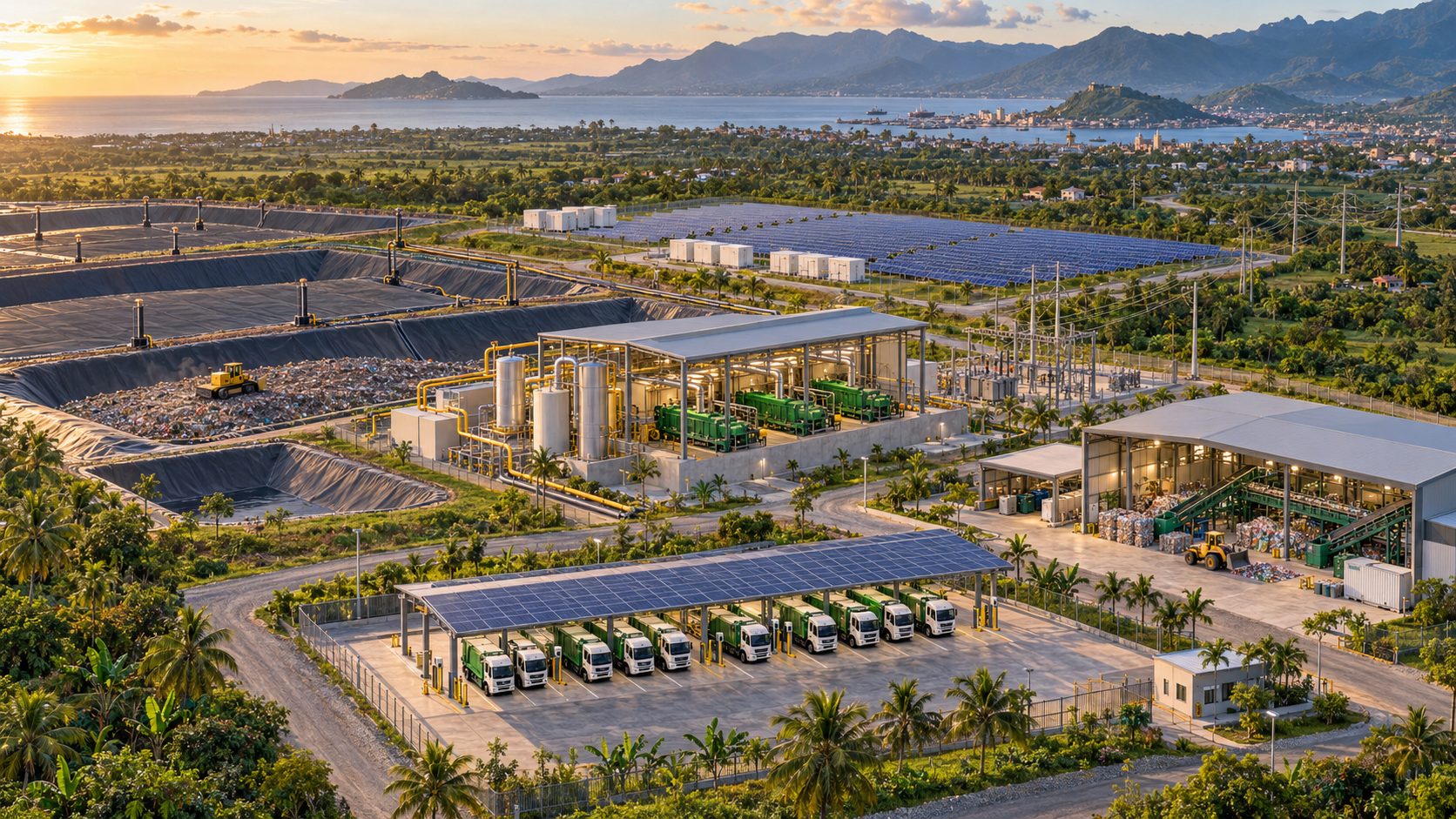
Vaudreuil · Cap-Haïtien · Northern Haiti
A campus that pays communities to clear their streets, seals the waste safely, and turns its gas — together with the sun — into electricity, with free basic power for every connected home as the goal.
Concept illustration
01 · The idea
Bottles, cans and plastic bags fill the streets and canals. At night, whole neighbourhoods go dark. Electrify Haiti turns the first problem into the solution to the second.
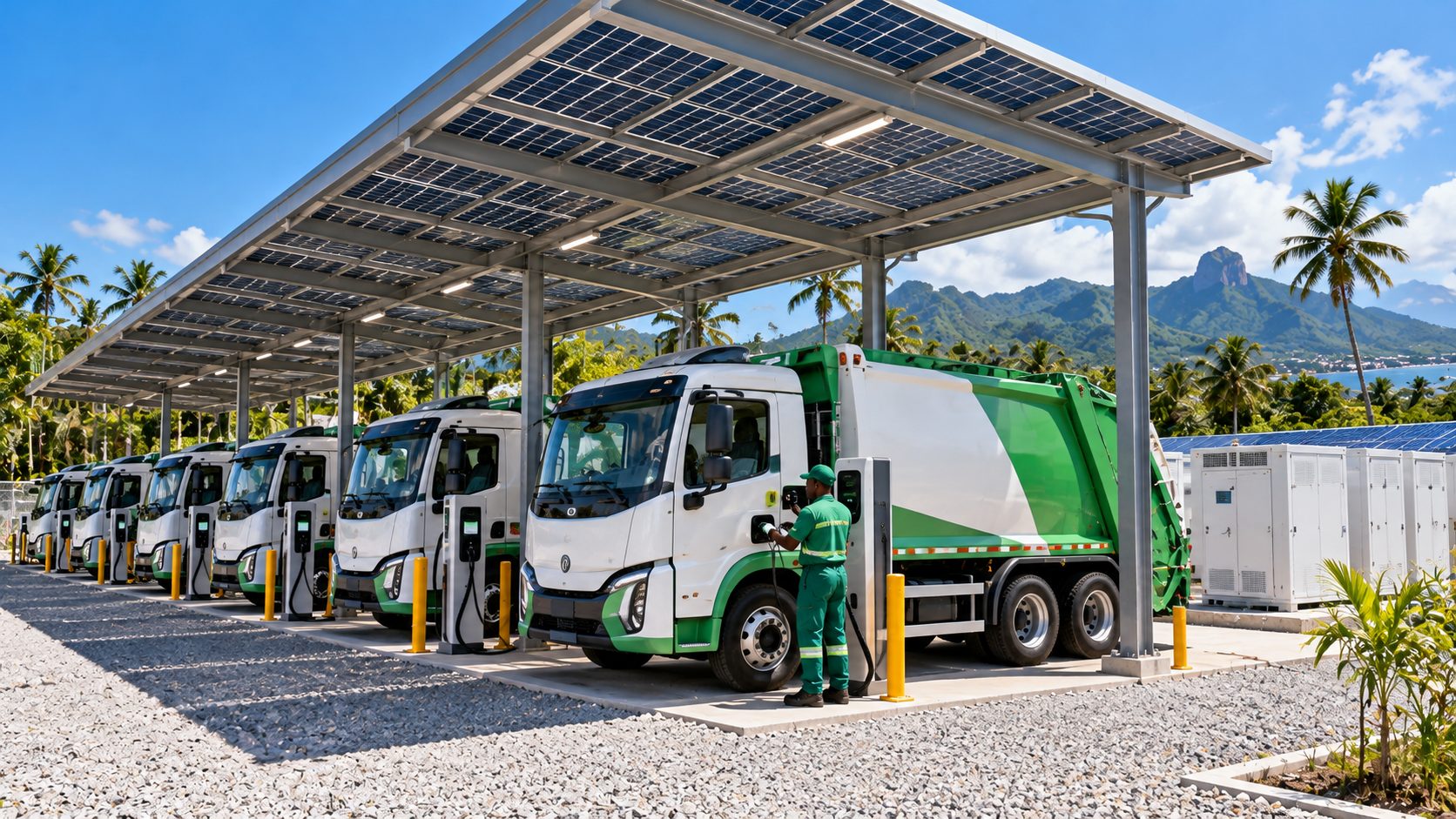
Families are paid for the waste they collect. Electric trucks bring it to a campus at Vaudreuil, near Cap-Haïtien. Recyclables are sorted out and sold. What remains is sealed in engineered landfill cells, where it slowly produces methane gas. That gas is captured, cleaned and burned inside engine-generators — and, with a neighbouring solar farm and batteries, becomes electricity for the town.
Read about the project →Watch
Three short films. Captions in English.
02 · Explore the campus
Tap a number to see what each part of the campus does.
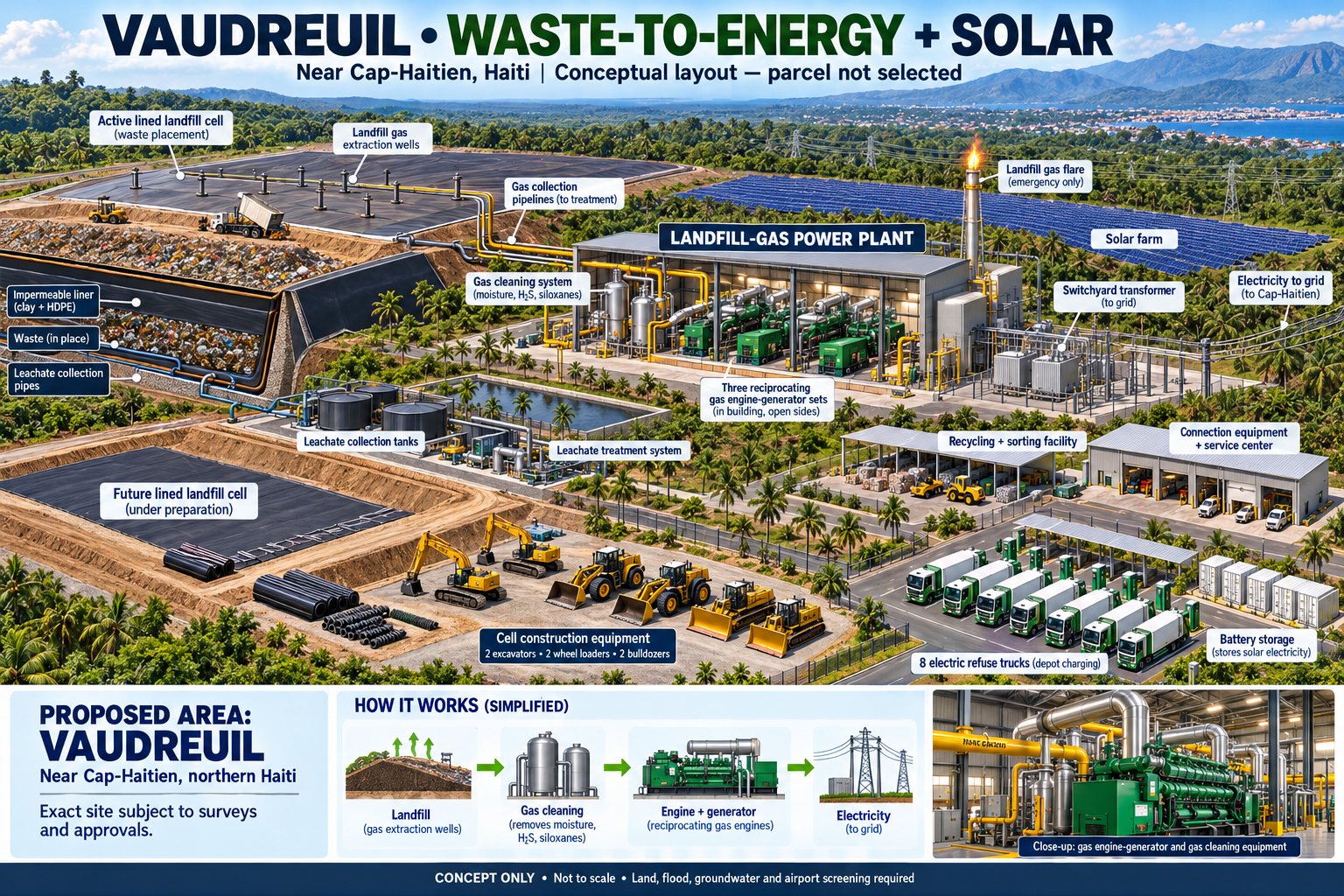
01 / 12
AI-generated concept. Not a photograph, surveyed site or engineering design.
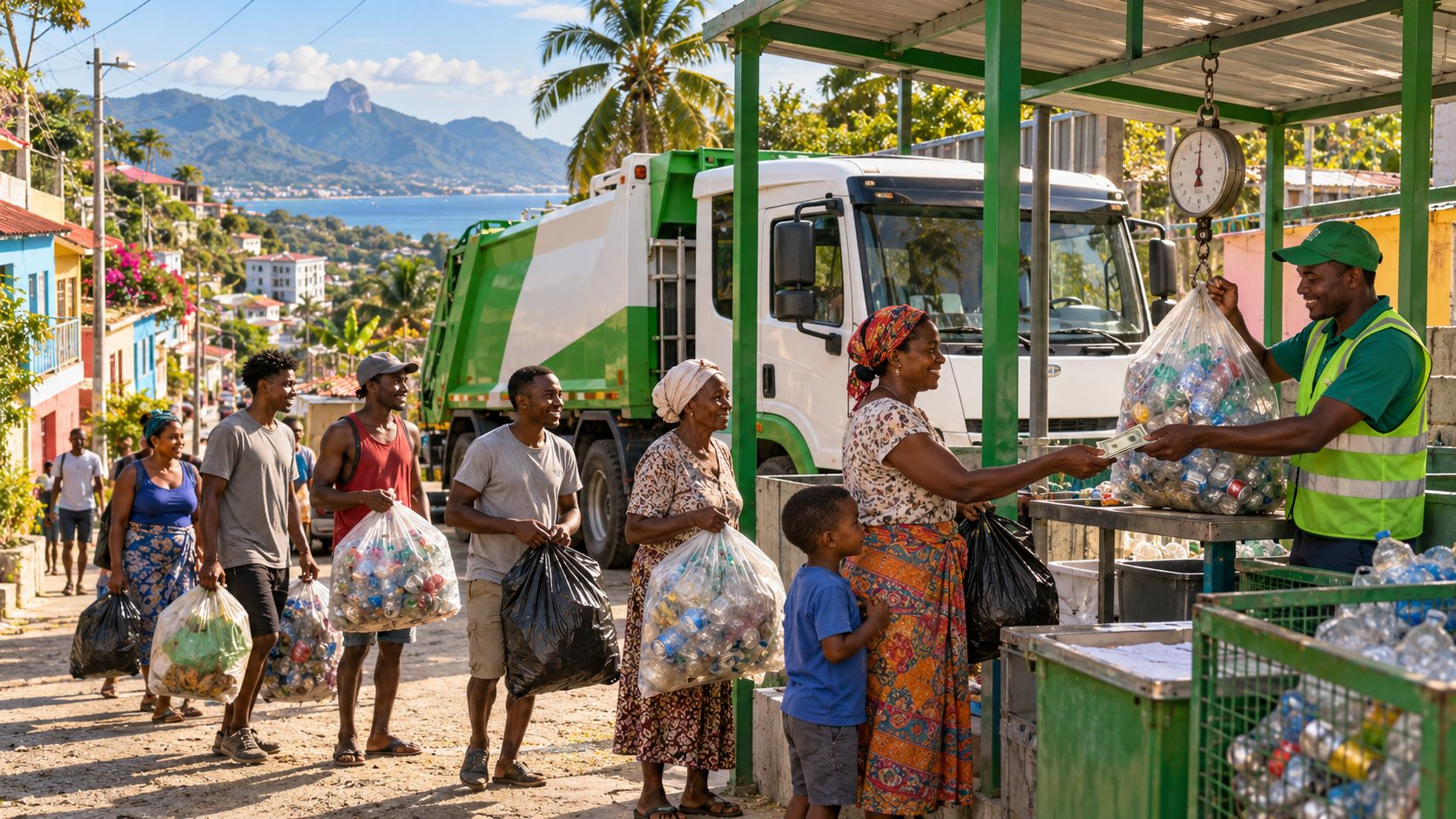
03 · Cash for trash
Clean streets should be a source of income, not a burden.
Residents, schools and neighbourhood groups bring bagged waste to local collection points and are paid by weight. Electric trucks take it from there. The streets get cleaner, families earn money, and the campus receives the steady supply it needs to make power.
04 · How it works
Solar + batteries power the network from the first phase, day and night, while the landfill builds up its gas.
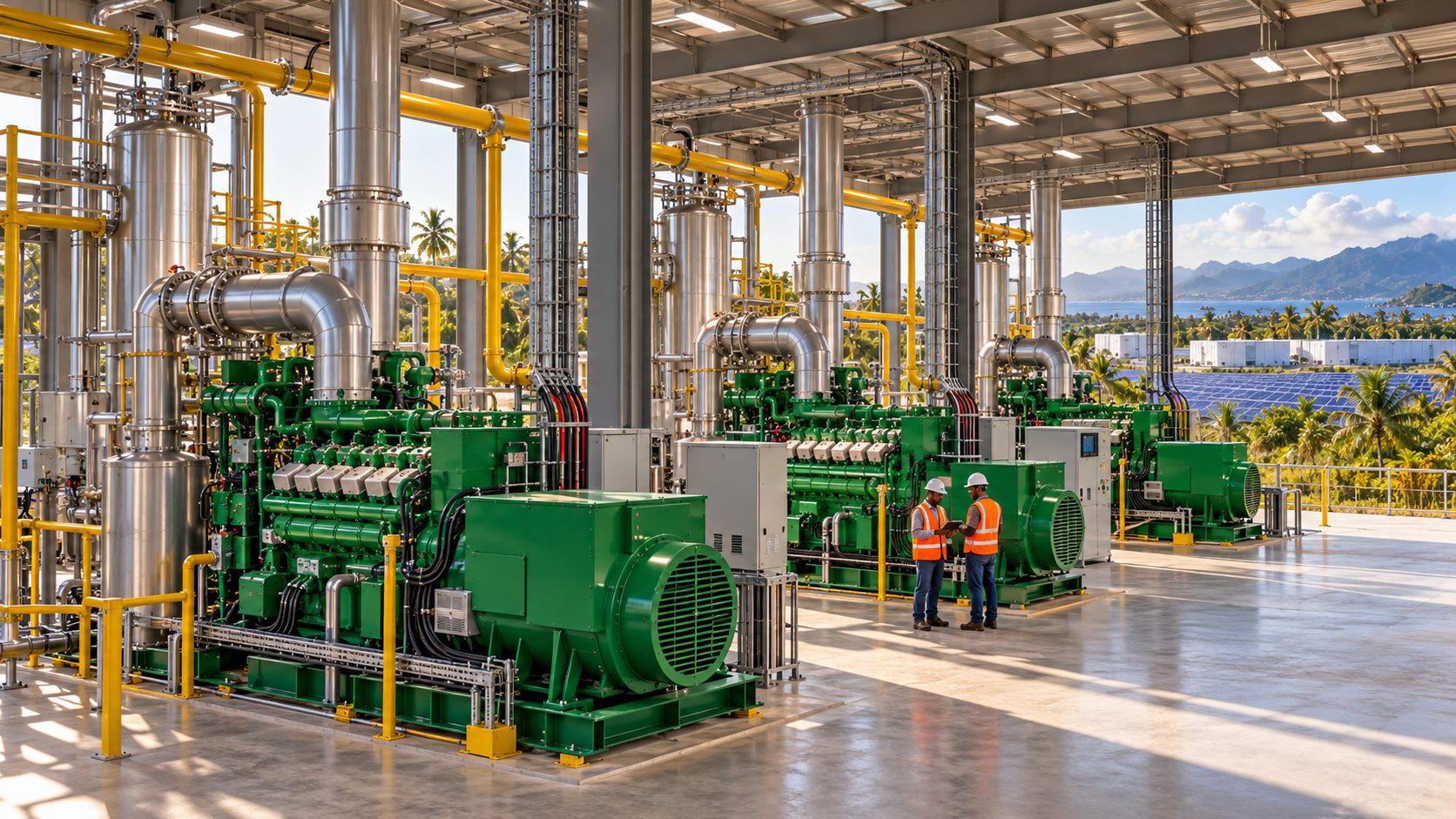
05 · What burns?
This is not an incinerator and there is no open burning.
The only fuel is landfill gas — mostly methane — drawn from sealed cells and cleaned before it reaches the engines. Burning methane for power keeps it out of the atmosphere, where it would trap far more heat than the carbon dioxide it becomes.
06 · Built to pay for itself
After the first investment, the campus is designed to run on its own income — with no further outside funding.
The size of the free allowance will be set from real operating numbers in the first phase, so the promise can always be kept.
07 · The result
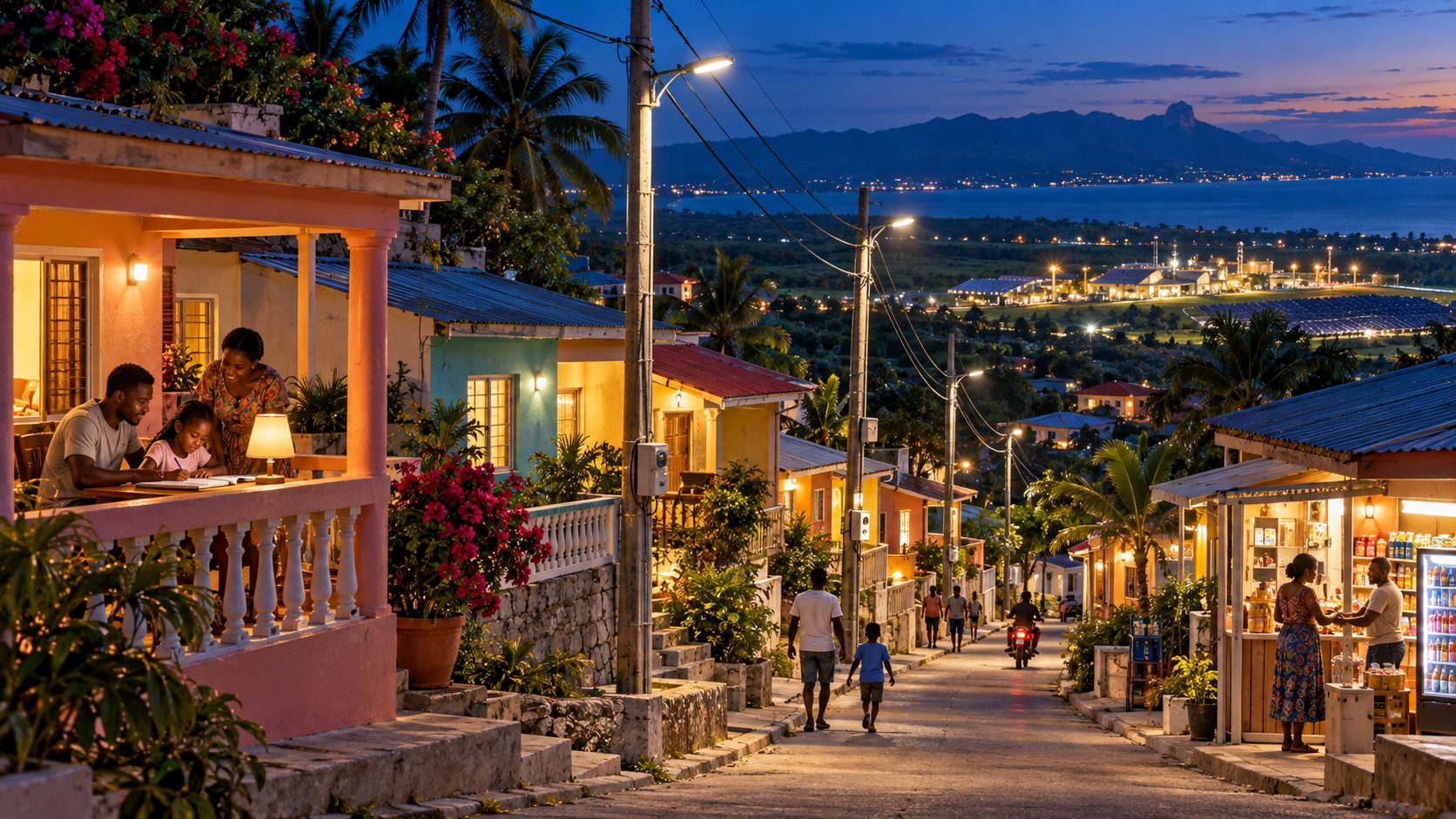
Homes that can study, cook and stay safe at night. Shops and workshops that can open longer.
Every connected household receives a basic allowance of electricity. Businesses and larger users pay for what they use, and that income keeps the whole system running.
08 · The roadmap
Now · Development
01Secure the site, measure the waste, assess demand, bring in engineers and get supplier quotes.
Next · First operations
02Launch paid collection, the first lined cells, sorting, and solar electricity with battery storage.
Then · Expansion
03Add landfill-gas generation once the gas is there, and extend service to more of the town.
Help build the first phase
Foundations, development funds, impact investors, engineers and suppliers — we would like to hear from you.